01
Publisher
Identify candidate publications across national, regional, and industry media.
Canadian digital authority
Link Building Canada helps brands acquire relevant, authoritative backlinks from Canadian websites. We focus on editorial placements, publisher quality, and market fit across English- and French-language media—not volume for its own sake.
Principle
Canadian search visibility is shaped by more than domain metrics. It is shaped by whether a brand appears inside publications that audiences already trust—national titles, regional media, industry outlets, and bilingual environments where English and French coverage serve different commercial realities. Link Building Canada treats acquisition as editorial strategy: relevance first, publisher quality second, volume last.
Programs begin with the authority profile the brand actually needs. Which commercial pages require support? Which categories and audiences matter in Ontario, Quebec, British Columbia, and Alberta? Which conversations in Toronto, Montreal, Vancouver, or Calgary already influence buyers? Without that map, outreach becomes a collection of available placements rather than a coherent market plan.
Authority work also requires restraint. Restrained anchors, clear destination planning, and documented acceptance criteria protect the brand while placements accumulate. Speed without standards is not a strategy.
01 / Positioning
Guest posting creates room for narrative when a publication needs a complete article and the brand has something worth contributing. Link insertions place references inside existing content when the host page already serves the right reader. Digital PR earns mentions when the story is newsworthy enough for journalists and editors. Enterprise programs add governance when multiple properties, markets, or product lines must move together without diluting standards.
Each instrument answers a different problem. Quotas that force one tactic regardless of page quality or publisher fit produce weaker profiles. Mature Canadian programs choose the instrument after understanding the publication, the audience, and the destination URL that needs support.
If you only need one instrument this quarter, that is acceptable. Breadth is optional; judgment is not.
Trust / Data
Every publisher is manually reviewed before campaign consideration. Topical alignment, organic visibility, domain history, outbound patterns, editorial quality, and spam signals all inform acceptance. Third-party tools support judgment; they do not replace it. High-trust categories such as finance require stricter thresholds because credibility is part of the offer.
Practice inventory figures describe broader operating capacity—500+ publisher relationships, 50,000+ backlink opportunities, 8+ years of experience, and 100% manual publisher review. Those figures are not Canadian-only inventory claims. What matters for any engagement is how much of that capacity clears the quality bar for the brand’s category and market.
Stakeholders should ask how review is staffed and recorded. A slogan without a workflow is not a standard.
Figures describe the broader practice inventory and operating standard. They are not Canadian-only inventory claims.
500+
Publisher relationships
50,000+
Backlink opportunities
8+
Years of experience
100%
Manual publisher review
Services
Editorial content placements on relevant Canadian websites and publications.
Contextual placements within existing relevant editorial content where appropriate.
Strategic outreach designed to generate editorial mentions and authoritative links.
Scalable link acquisition programs for larger brands and complex campaigns.
Authority acquisition for ecommerce brands, category ecosystems, and commercially competitive markets.
Framework
Four criteria guide every publisher decision. They are deliberate enough to reject weak inventory, and practical enough to run month after month without turning into theatre.
Placement value begins with topical alignment, audience fit, and the commercial realities of the Canadian market.
We prioritize publications with genuine editorial standards, organic visibility, and credible domain histories.
Links belong inside content that reads naturally to publishers, readers, and search engines alike.
Authority compounds through paced, quality-controlled acquisition rather than short-lived volume campaigns.
Evaluation
Topical alignment, traffic quality, authority signals, editorial standards, and placement context are reviewed by hand before a site enters campaign consideration.
01
Identify candidate publications across national, regional, and industry media.
02
Confirm topical and audience alignment with the brand and destination pages.
03
Assess organic visibility and whether demand appears genuine rather than manufactured.
04
Review domain history, backlink patterns, and third-party metrics as supporting signals.
05
Evaluate writing quality, publishing patterns, and outbound linking behavior.
06
Accept only opportunities that clear manual review before campaign consideration.
Canadian Market
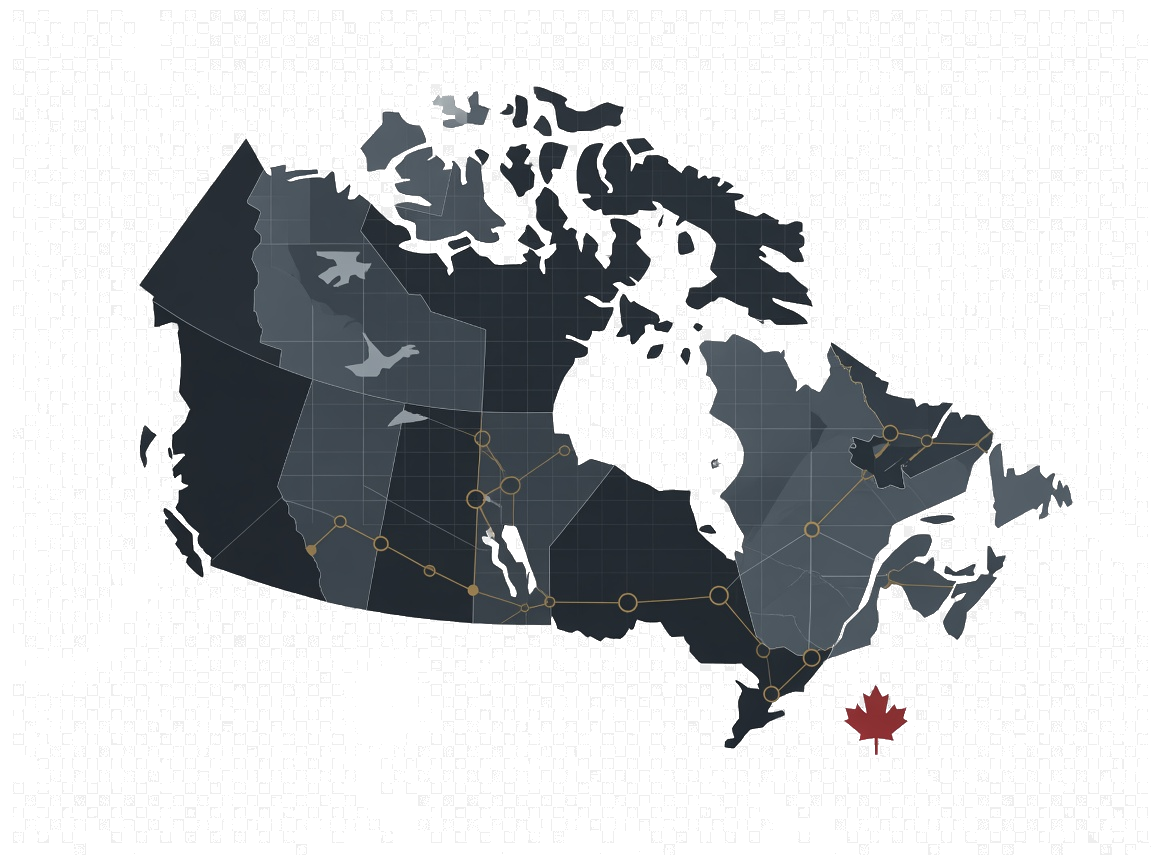
English-language and French-language opportunities can both matter when they support commercial objectives. Quebec coverage is not optional decoration for brands that serve Francophone audiences, and poor localization damages credibility faster than no placement at all. Regional titles across Ontario, British Columbia, and Alberta can carry stronger proximity signal than vaguely national pages with no audience overlap.
The work is paced to compound. Restrained anchors, clear destination planning, live-link review, and documented acceptance criteria protect the brand while authority accumulates. The objective is not more links. It is the right links, placed deliberately, in publications that still matter after the campaign report is filed.
Naming regions and cities describes media focus and commercial demand—not physical offices in every market listed.
A typical engagement moves from authority briefing into publisher research, manual review, content or story development, outreach, placement, and live-link QA. That sequence sounds ordinary until a team skips a step. Skipping review to hit a date is how brands inherit inventory-style links. Skipping destination planning is how homepages accumulate links while commercial URLs stay thin.
Canadian programs add language and regional checkpoints inside that sequence. If Quebec coverage is in scope, French quality review happens before pitches go out. If Alberta or British Columbia industry media matter more than national lifestyle titles, research weighting changes accordingly. Process is only useful when it encodes market reality.
Clients should expect clear decline rationales. A quiet month of diligence can be healthier than a busy month of borderline acceptances. Operating philosophy should be visible before a sales conversation begins.
When you contact the team, bring destination URLs and language requirements. Specific briefs receive specific counsel.
Regions
Cities
National and regional English editorial environments across major Canadian markets.
Quebec and Francophone Canadian media where language and market fit support the strategy.
Broader-reach publications that shape category conversations at a national level.
Local and regional titles that matter for market-specific authority and audience proximity.
Vertical media where specialist coverage carries stronger commercial and topical signal.
Industries
Engagement
Named client outcomes are discussed privately. Publicly, we share the operating cadence used across engagements: discovery, publisher architecture, and execution discipline.
Discovery
Define objectives, competitive context, and the authority profile the campaign must build.
Publisher architecture
Map Canadian publishers, topic clusters, and editorial opportunities aligned to your category.
Execution cadence
Manually review each prospect against relevance, quality, history, and risk signals.
Insights
How Canadian brands build durable search authority through publisher relevance, bilingual media choices, and paced editorial acquisition—not link volume.
Investment · Feb 26, 2026
Guest Posting · Feb 10, 2026
Publisher Quality · Jan 28, 2026
Tactics · Jan 14, 2026
Digital PR · Dec 18, 2025
Next step
Discuss your market, targets, and link acquisition requirements with our team.